

Maya’s grandmother always said the best things in life are handmade.
But Maya didn’t understand—until she broke her fifth hair tie in a month.
Each snap meant damaged hair. Each tug meant frustration. Each replacement meant more waste.
One rainy afternoon, she found her grandmother’s old sewing basket.
Inside? Silk scraps from vintage dresses and soft cotton remnants.
“Why not make a scrunchie myself?” she thought.
That simple question changed everything.
Within an hour, she created her first scrunchie. It glided through her hair like a whisper. No pulling. No breaking. No damage.
Today, Maya makes scrunchies for herself, her friends, and her daughter.
The same can happen for you.
Why Learn How To Make a Scrunchie?
Making your own scrunchies transforms your hair care routine.
Financial Benefits:
- Save money on expensive accessories
- Use fabric you already own
- Create unique pieces at minimal cost
Hair Health Benefits:
- Choose gentle, hair-safe materials
- Control fabric quality personally
- Eliminate cheap elastic damage
Creative Freedom:
- Match your personal style perfectly
- Create seasonal collections
- Design gift-worthy accessories
Materials You’ll Need To Make a Scrunchie
Essential Supplies
Fabric:
- Rectangle measuring 18″ x 3.5″ (standard size)
- Silk, cotton, or satin work best
- Choose tightly-woven fabrics for durability
Elastic:
- 8-9 inches of 1/4″ elastic
- Hair-safe elastic recommended
- Avoid overstretched or worn elastic
Tools:
- Sewing machine or needle
- Thread matching your fabric
- Scissors
- Safety pin
- Ruler or measuring tape
- Iron (optional but helpful)
Fabric Comparison Table
| Fabric Type | Hair Benefits | Difficulty Level | Best For |
|---|---|---|---|
| Silk | Reduces breakage, adds shine | Medium | Fine or damaged hair |
| Cotton | Breathable, gentle grip | Easy | Everyday wear |
| Satin | Smooth, prevents frizz | Easy | Curly or textured hair |
| Velvet | Strong hold, luxurious feel | Medium | Thick hair |
| Chiffon | Lightweight, delicate look | Hard | Special occasions |
How To Make a Scrunchie: Step-by-Step Instructions
Step 1: Cut Your Fabric
Measure and cut your fabric rectangle.
Standard measurements:
- Length: 18 inches
- Width: 3.5 inches
Pro tip: Adjust based on desired fullness.
- Fuller scrunchie = 22 inches long
- Slimmer scrunchie = 15 inches long
According to sewing experts, fabric grain matters significantly for durability and appearance.
Step 2: Fold the Fabric
Fold your fabric in half lengthwise.
The right sides should face each other. The wrong side faces out.
This creates a long tube shape.
Pin along the open long edge.
Step 3: Sew the Long Edge
Set your sewing machine to a straight stitch.
Use a 1/4 inch seam allowance.
Sew along the pinned edge from end to end.
Important: Leave both short ends open.
Hand-sewing alternative:
- Use a backstitch for strength
- Keep stitches small and even
- Takes 10-15 minutes longer
Step 4: Turn the Tube Right-Side Out
This step transforms your fabric.
Attach a safety pin to one short end.
Push the pin through the tube.
Guide it carefully through the entire length.
The fabric will bunch up—that’s normal.
Pull the pin out the other end.
Your tube now shows the pretty side.
Step 5: Insert the Elastic
Thread your elastic through the fabric tube.
Method 1: Safety Pin
- Pin elastic to safety pin
- Push through the tube
- Don’t let the other end slip inside
Method 2: Bodkin Tool
- Clamp elastic in bodkin
- Feed through more easily
- Professional sewing tool
Step 6: Secure the Elastic Ends
Overlap the elastic ends by 1/2 inch.
Sew them together securely.
Machine method:
- Stitch back and forth multiple times
- Creates strongest hold
Hand method:
- Whipstitch ends together
- Wrap thread around multiple times
Test the elastic by stretching gently.
It should feel secure and bouncy.
Step 7: Sew the Fabric Ends Together
Your fabric tube still has two open ends.
Tuck one end inside the other about 1/2 inch.
This creates a clean finish.
Pin in place.
Finishing options:
Option 1: Machine stitch
- Sew close to the folded edge
- Strongest and quickest method
Option 2: Hand stitch
- Use a ladder stitch for invisible seam
- More time-consuming but beautiful
Option 3: No-sew method
- Use fabric glue for washable fabrics
- Less durable for frequent washing
Step 8: Final Adjustments
Distribute the fabric evenly around the elastic.
Fluff and arrange the gathers.
Give it a gentle steam or press if needed.
Your handmade scrunchie is complete!
Scrunchie Size Guide
Different hair types need different scrunchie sizes.
| Hair Type | Fabric Length | Elastic Length | Width |
|---|---|---|---|
| Fine/Thin | 15-16 inches | 7 inches | 3 inches |
| Medium | 18 inches | 8 inches | 3.5 inches |
| Thick | 20-22 inches | 9 inches | 4 inches |
| Children | 14 inches | 6 inches | 2.5 inches |
| Extra Full | 24 inches | 8 inches | 4 inches |
Common Mistakes When Making Scrunchies
Mistake 1: Using the Wrong Fabric
Problem: Stiff or slippery fabrics don’t work well.
Solution: Choose medium-weight cotton or silk.
Quilting cotton works perfectly for beginners.
Mistake 2: Elastic Too Tight or Too Loose
Problem: Scrunchie doesn’t hold or is uncomfortable.
Solution: Test elastic on your wrist first.
It should fit snugly but not dig in.
Mistake 3: Seam Allowance Inconsistency
Problem: Uneven seams create a lumpy appearance.
Solution: Use your presser foot as a guide.
Mark your machine with tape if needed.
Mistake 4: Not Pressing Seams
Problem: Fabric doesn’t lay flat.
Solution: Press seams open before turning.
This creates a professional finish.
Mistake 5: Losing Elastic End Inside Tube
Problem: Elastic slips completely inside fabric.
Solution: Pin both ends before threading.
Safety pins prevent this frustrating issue.
Advanced Scrunchie Variations
Double-Layer Scrunchie
Create extra volume and visual interest.
Materials:
- Two fabric rectangles (contrasting colors)
- 8 inches of elastic
Method:
- Layer fabrics with right sides together
- Sew as normal scrunchie
- Creates reversible design
Twisted Scrunchie
Add an elegant twist to your design.
Technique:
- Twist fabric once before sewing ends
- Creates figure-eight appearance
- Looks complex but simple to make
Bow Scrunchie
Combine a scrunchie with decorative bow.
Addition:
- Make standard scrunchie
- Create separate fabric bow
- Attach bow with hand stitching
Mini Scrunchie
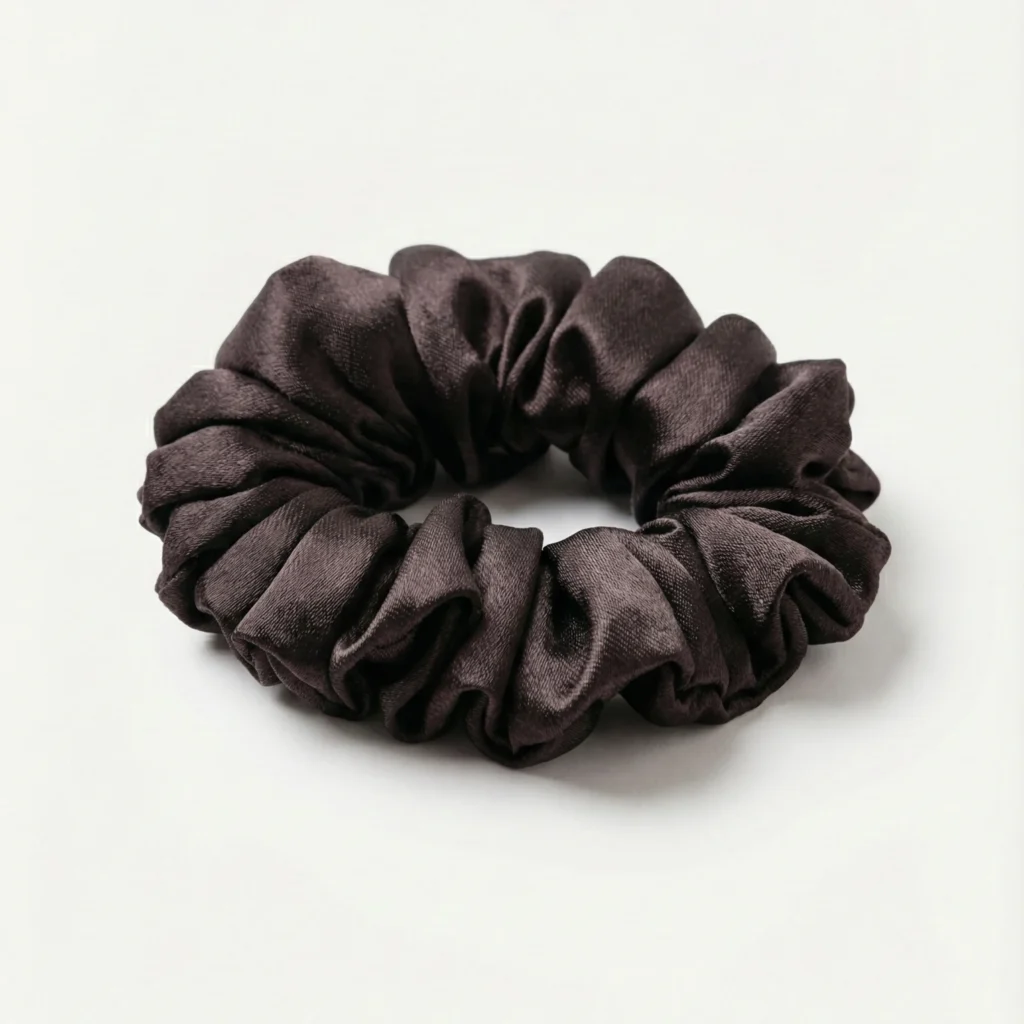
Perfect for children or delicate styling.
Adjustments:
- Cut fabric 12″ x 2.5″
- Use 6 inches of elastic
- Great for small ponytails
Fabric Selection Tips
Best Fabrics for Hair Health
Silk:
- Reduces friction and breakage
- Maintains hair moisture
- Prevents sleep creases
- Higher cost but worth investment
- Similar benefits to silk
- More affordable option
- Easy to sew for beginners
- Widely available
Cotton:
- Breathable and comfortable
- Gentle on all hair types
- Machine washable
- Most versatile choice
Fabrics To Avoid
Rough textures:
- Burlap
- Raw linen
- Heavy canvas
Extremely stretchy:
- Jersey knit
- T-shirt material
- Athletic fabrics
Slippery synthetics:
- Polyester taffeta
- Cheap costume satin
- Plastic-feeling fabrics
Caring for Your Handmade Scrunchies
Washing Instructions
Silk scrunchies:
- Hand wash in cool water
- Use gentle detergent
- Air dry flat
- Never wring or twist
Cotton scrunchies:
- Machine wash in mesh bag
- Warm water acceptable
- Tumble dry low
- Iron if desired
Satin scrunchies:
- Hand wash recommended
- Cold water only
- Air dry
- Light steaming for wrinkles
Storage Tips
Keep scrunchies organized and protected.
Best practices:
- Store flat or loosely gathered
- Avoid crushing delicate fabrics
- Separate light and dark colors
- Use drawer dividers or boxes
What to avoid:
- Storing while damp
- Exposing to direct sunlight
- Stacking heavy items on top
- Keeping in humid bathrooms
Troubleshooting Common Issues
Problem: Fabric Won’t Turn Right-Side Out
Solution:
- Use a longer safety pin
- Work in smaller sections
- Try a chopstick to push fabric through
- Ensure seam allowance isn’t too wide
Problem: Elastic Stretched or Broken
Solution:
- Replace with new elastic immediately
- Check elastic quality before starting
- Don’t pull too hard when threading
- Use elastic specifically for sewing
Problem: Uneven Gathers
Solution:
- Redistribute fabric manually
- Ensure elastic length is correct
- Check that fabric tube is uniform
- Steam gathers into place
Problem: Seam Keeps Opening
Solution:
- Backstitch at beginning and end
- Use smaller stitch length
- Reinforce with hand stitching
- Check thread tension
Cost Analysis: DIY vs. Store-Bought
Handmade Scrunchie Cost
Materials per scrunchie:
- Fabric: $0.50 – $2.00
- Elastic: $0.15 – $0.30
- Thread: $0.05
Total cost: $0.70 – $2.35 per scrunchie
Time investment:
- First scrunchie: 30-45 minutes
- After practice: 10-15 minutes
- Batch of 5: 45-60 minutes
Store-Bought Comparison
Regular scrunchies:
- Basic cotton: $3-5 each
- Silk or satin: $8-15 each
- Designer brands: $15-30 each
Savings:
- Save 50-90% by making your own
- Complete control over materials
- Better quality than mass-produced
Making Scrunchies To Sell
Pricing Your Handmade Scrunchies
Calculate your costs properly.
Formula:
- Material cost x 3 = Minimum price
- Add hourly rate for your time
- Research competitor pricing
Example pricing:
- Cotton scrunchies: $5-8
- Silk scrunchies: $12-18
- Specialty designs: $10-20
Legal Considerations
Before selling:
- Check local business licensing requirements
- Understand tax obligations
- Consider liability insurance
- Follow platform rules (Etsy, etc.)
Marketing Tips
Stand out from competitors:
- Professional product photography
- Clear material descriptions
- Unique fabric combinations
- Excellent customer service
- Eco-friendly packaging
Environmental Benefits of DIY Scrunchies
Making scrunchies reduces waste significantly.
Sustainability advantages:
- Use fabric scraps from other projects
- Repurpose old clothing
- Avoid plastic packaging
- Create durable, long-lasting accessories
- Reduce fast-fashion consumption
Eco-friendly material choices:
- Organic cotton
- Deadstock silk
- Recycled fabrics
- Natural dyes
- Biodegradable elastic options
Frequently Asked Questions
Can I make scrunchies without a sewing machine?
Yes, absolutely.
Hand sewing works perfectly for scrunchies.
Use a backstitch for strength. Takes 15-20 minutes per scrunchie. Creates identical results to machine sewing.
What’s the best elastic for scrunchies?
Hair-safe elastic works best.
Look for:
1/4 inch width
Soft, braided construction
Good recovery (bounces back)
No latex (if allergies exist)
How long do handmade scrunchies last?
Properly made scrunchies last years.
Lifespan factors:
Fabric quality
Elastic quality
Washing frequency
Usage intensity
Silk scrunchies typically last 1-2 years. Cotton scrunchies last 2-3 years.
Can I make scrunchies from old t-shirts?
Jersey knit is challenging but possible.
Considerations:
Fabric stretches during sewing
May not hold shape well
Better for casual use
Requires stretch needle
What size scrunchie is best for thick hair?
Thick hair needs larger scrunchies.
Recommended dimensions:
Fabric: 20-22 inches long
Elastic: 9 inches
Width: 4 inches
Test and adjust based on your hair volum
Expert Tips for Perfect Scrunchies
From Professional Seamstresses
Tip 1: Prewash all fabrics before cutting.
This prevents shrinkage after completion.
Tip 2: Use quality thread.
Cheap thread breaks during use.
Tip 3: Press as you go.
Professional results come from proper pressing.
Tip 4: Make several at once.
Batch production saves significant time.
Tip 5: Keep a scrunchie journal.
Note fabric types and measurements that work best.
Scrunchie Gift Ideas
Handmade scrunchies make thoughtful gifts.
Gift packaging ideas:
- Set of 3 in coordinating colors
- Seasonal collections (spring florals, winter plaids)
- Matching scrunchie and headband sets
- Personalized fabric choices
- Beautiful organza bags
Occasions perfect for scrunchie gifts:
- Birthday party favors
- Bridesmaid thank-you gifts
- Teacher appreciation
- Holiday stocking stuffers
- Self-care gift baskets
Conclusion: Your Scrunchie-Making Journey
You now know exactly how to make a scrunchie from start to finish.
Each scrunchie you create protects your hair. Each stitch builds your sewing confidence. Each finished piece reflects your personal style.
Start with simple cotton fabric. Master the basic technique. Then explore silk, velvet, and specialty designs.
Remember Maya’s story?
She started with one rainy afternoon and fabric scraps.
Now you have everything you need to start your own scrunchie journey.
Your hair deserves accessories that care for it. Your style deserves something uniquely yours. Your time deserves a rewarding, creative project.
Gather your materials today. Make your first scrunchie this week. Transform your hair care routine forever.